Fear of Leaving the House Not Agoraphobia: What Else Could It Mean?
Fear of leaving the house not agoraphobia is a real search because many people sense that something is wrong, yet the usual agoraphobia description does not quite fit. Maybe you can leave for work but avoid social plans. Maybe you want to go out but cannot get started. Maybe the outside world feels unsafe after stress, illness, trauma, burnout, or months of isolation. If public places, crowds, transit, or panic-like feelings are part of the pattern, an agoraphobia and panic screening can offer a private starting point for reflection. It is not a formal clinical evaluation, but it can help you organize what you are noticing before deciding what kind of support might fit.
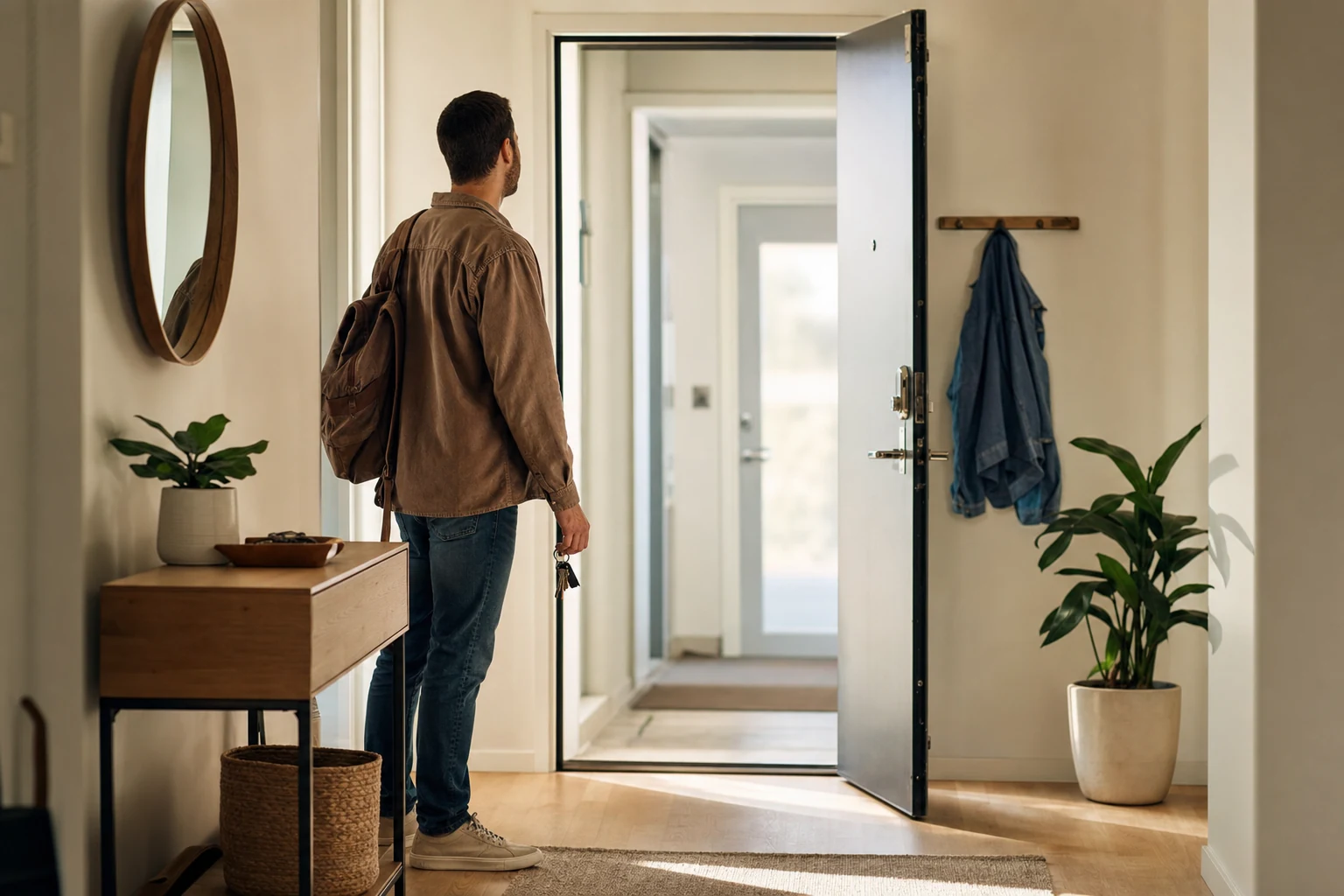
Why leaving the house can feel hard without fitting agoraphobia
Agoraphobia is often associated with fear of being in places where escape might feel difficult or help might feel unavailable, such as crowds, public transport, open spaces, lines, or being outside alone. But not every struggle to leave home follows that pattern. Some people are not mainly afraid of panic in public. They may feel exhausted, numb, unsafe, overstimulated, ashamed, stuck in routines, or unable to shift from intention to action.
That distinction matters because the next step depends on the pattern. A person who fears a panic surge on the bus may need different support than someone who is depressed and has no energy, or someone with ADHD who spends three hours trying to initiate a simple errand. The label is less important than the question: what happens in the moments before you stay home?
If the answer is "I feel trapped, exposed, or unable to get help if anxiety rises," agoraphobia may be worth exploring. If the answer is "I cannot start," "nothing feels worth doing," "the neighborhood feels unsafe," or "my body feels too depleted," other explanations may deserve equal attention.
Common patterns behind fear of going out in public
The phrase fear of going out in public can point to several overlapping experiences. One person may avoid public places because they worry about panic symptoms. Another may fear being judged, watched, or embarrassed. Someone else may feel physically vulnerable after illness, harassment, a fall, or a traumatic event. For some, the hard part is not public space at all; it is the transition from home mode to outside mode.
Here are common patterns to compare:
- Panic-focused fear: "What if I feel dizzy, trapped, or unable to leave?"
- Social fear: "What if people notice me, judge me, or expect something from me?"
- Trauma-linked fear: "What if something dangerous happens again?"
- Depression-linked withdrawal: "I do not want to leave the house or do anything."
- ADHD-linked initiation difficulty: "I want to go, but I cannot get moving."
- Environmental worry: "My home, neighborhood, or surroundings do not feel safe."
- Health or mobility concern: "What if my body cannot handle the trip?"
These categories can overlap. A person may have panic symptoms and depression. A person with ADHD may also feel socially anxious after canceling plans repeatedly. The goal is not to force one perfect explanation. It is to notice which part of the experience is loudest.

Anxiety about leaving the house alone
Anxiety about leaving the house alone often points to the role of safety cues. You may be able to go out with a partner, parent, roommate, friend, or familiar driver, but feel overwhelmed when you imagine doing the same trip solo. That does not automatically mean agoraphobia, but it is a useful clue.
Ask what the companion changes. Do they help you feel less judged? Do they know what to do if you panic? Do they make the environment feel less unpredictable? Do they help you make decisions, drive, navigate, or speak to others? The answer can reveal whether the core issue is panic, social worry, executive functioning, trauma sensitivity, physical vulnerability, or practical confidence.
It can also help to separate "alone outside" from "alone in a specific situation." Walking around the block, entering a grocery store, taking public transit, driving on highways, waiting in line, and attending an appointment can activate different fears. A private self-reflection tool may help you notice whether your pattern clusters around agoraphobia-like situations, panic cues, or broader avoidance.
Not wanting to leave the house or do anything
Not wanting to leave the house or do anything can feel similar from the outside, but internally it may be very different from fear. Depression, grief, burnout, chronic stress, sleep problems, and loneliness can all shrink motivation. In these cases, the thought of going out may not bring a sharp alarm. It may bring heaviness, blankness, irritation, or a sense that nothing is worth the effort.
Depression can also blend with anxiety. You may avoid going out because you feel low, then feel more isolated, then find the next outing even harder. Over time, home can become the default because it demands the least energy, not because the outside is always terrifying.
If this sounds familiar, look for changes in appetite, sleep, concentration, pleasure, self-care, work, school, or relationships. If you feel hopeless, unsafe with yourself, or unable to manage daily needs, contact a local emergency number, crisis line, or qualified professional support. Educational articles and online screeners can help you organize thoughts, but they cannot replace urgent care or ongoing professional guidance.
Struggling to leave the house with ADHD
Struggling to leave the house with ADHD may look like avoidance, but the engine underneath can be task initiation. The person may not be afraid of the errand itself. Instead, leaving requires a chain of steps: showering, choosing clothes, finding keys, checking time, deciding a route, remembering the wallet, tolerating transitions, and leaving before the window closes.
When that chain breaks, shame often enters. The person may say, "I just did not want to go," because explaining the full sequence feels embarrassing. But the practical support is different. Instead of only asking "What am I afraid of?" it may help to ask:
- Which step usually stalls me?
- Do I need a body double, timer, checklist, or pre-packed bag?
- Is the outing too vague?
- Am I avoiding sensory overload, decision fatigue, or lateness shame?
- Would a smaller version count, such as stepping outside for two minutes?
If fear arrives after repeated failed attempts, both patterns may be present: initiation difficulty first, anxiety second.

Fear of home or pervasive environmental worry
Some search terms sound contradictory, such as fear of home or fear of your home or pervasive environmental worry. This may describe feeling unsafe inside the home, outside the home, or in the surrounding environment. The concern might be about break-ins, contamination, conflict, neighbors, noise, violence, weather, illness, or a general sense that danger is everywhere.
When worry feels pervasive, leaving the house may be only one part of a larger safety system. You may check locks repeatedly, scan surroundings, avoid windows, monitor news, delay sleep, or feel tense even when you stay in. In that case, the question is not simply "Why can't I go out?" It may be "Why does my nervous system feel on guard in so many places?"
This is a good moment to seek support from a licensed mental health professional, primary care clinician, or community resource, especially if the worry is escalating, tied to trauma, or interfering with basic routines. If there is an actual safety threat at home or nearby, practical safety planning matters too. Emotional support should not be used to dismiss real-world risk.
A simple way to map what is happening
You do not have to solve everything before taking one useful step. Try a three-column map for one week. Keep it brief enough that you will actually use it.
Column one: situation. Write the specific outing, such as "pharmacy," "trash bins," "bus stop," "school pickup," or "friend's dinner."
Column two: first barrier. Write the earliest thing that stopped you. Was it a body sensation, intrusive worry, low mood, task confusion, fear of judgment, unsafe location, or lack of support?
Column three: smallest next step. Choose one step that is too small to argue with. Examples include putting shoes by the door, standing outside for thirty seconds, texting a friend for company, choosing tomorrow's route, asking a clinician about symptoms, or writing down what you feared would happen.
After several entries, patterns usually become easier to see. If your map repeatedly includes panic sensations, feeling trapped, fear of public places, or avoiding being outside alone, agoraphobia-related resources may be relevant. If the map repeatedly shows low mood, initiation difficulty, or environmental worry, your support plan may need a different focus.

When to seek more support
Consider reaching out for professional support if the pattern lasts for weeks, keeps you from work or school, blocks medical care, causes major isolation, leads to panic-like symptoms, or makes your world steadily smaller. Support may include therapy, medical review, skills for anxiety, trauma-informed care, ADHD coaching or treatment planning, depression support, or practical safety resources.

It is also worth seeking help sooner if you rely on alcohol, substances, excessive reassurance, repeated checking, or rigid rituals to get through the doorway. These strategies may feel useful in the moment while keeping the underlying cycle active.
If you are supporting someone else, avoid arguing that the fear is irrational. Ask what leaving feels like, what they worry might happen, and what small step would feel respectful rather than forced. The goal is not to drag someone outside. The goal is to help them feel less alone while they identify the right kind of care.
A low-pressure next step if agoraphobia might be part of it
If fear of leaving the house not agoraphobia still feels like your best description, trust that nuance. You are allowed to be uncertain. You can explore the pattern without locking yourself into a label.
When public spaces, crowds, transportation, panic sensations, or being outside alone are part of the picture, a gentle agoraphobia test can help you reflect on those themes in a structured way. Use the result as a conversation starter, not a final answer. Bring your notes, examples, and questions to a qualified professional if the pattern is affecting your life.
Progress can begin with information, but it usually grows through small, repeatable steps: noticing the barrier, lowering shame, getting support, and choosing one next action that matches the real problem.
FAQ
What is it called when someone is afraid to leave the house?
It may be described as agoraphobia when the fear centers on places or situations where escape or help might feel difficult, especially if the person avoids public spaces, crowds, transit, or being outside alone. But fear of leaving the house can also relate to panic, depression, trauma, OCD, ADHD, health concerns, social anxiety, or real safety issues.
Why am I too scared to leave the house?
The reason depends on what happens before you stay home. You might fear panic symptoms, judgment, danger, getting trapped, losing control, sensory overload, or not having enough energy. Track the first barrier that appears, not just the final behavior of staying inside.
Am I developing agoraphobia?
Possibly, especially if your world is getting smaller because you avoid public places, transportation, crowds, open areas, lines, or going out alone. Still, only a qualified professional can evaluate your full situation. A self-reflection tool can help you prepare clearer examples.
Can not wanting to leave the house be depression?
Yes, it can be related to depression, particularly when the main feeling is heaviness, low motivation, loss of interest, fatigue, or hopelessness rather than fear of a specific outside situation. Anxiety and depression can also overlap, so support should consider both mood and avoidance.
How is ADHD involved in struggling to leave the house?
ADHD can make leaving hard because the outing requires planning, transitions, time awareness, decisions, sensory tolerance, and task initiation. The person may want to go out but get stuck before the first step. Checklists, routines, reminders, and external support may help reduce friction.
What is tomophobia?
Tomophobia is commonly used to describe an intense fear of medical procedures or surgery. It is different from fear of leaving the house, though someone might avoid appointments because medical settings, procedures, or health worries feel overwhelming.
Is agoraphobia treatable?
Many people improve with appropriate support, such as therapy, gradual exposure-based work, panic management skills, medication guidance when appropriate, and practical planning. The path is personal, and improvement is not a promise, but help is available.