Agoraphobia Test: Unpacking Causes & Triggers
Feeling overwhelmed by fears that keep you from certain places or situations? You're not alone. Many individuals grapple with intense anxiety related to public spaces, crowds, or even leaving their home, often wondering why do I feel this way? This guide will delve into the complex psychological, biological, and environmental factors that can lead to agoraphobia, helping you understand the "why" behind your experiences. Understanding these elements is the first step toward clarity, and a confidential agoraphobia test can be a valuable tool on this journey. If you're looking for initial insights, consider taking a free agoraphobia test to better understand your symptoms.
Understanding Agoraphobia Causes: Why Do I Feel This Way?
Agoraphobia rarely stems from a single source. Instead, it's often a complex interplay of various factors that converge to create patterns of fear and avoidance. Understanding what causes agoraphobia involves looking at your mind, your biology, and your life experiences. This knowledge can empower you to see your situation not as a personal failing, but as a condition with understandable roots. Exploring these roots is a crucial part of living with agoraphobia and moving toward recovery.
Psychological Factors: The Role of Past Experiences and Anxiety Sensitivity
Our minds are powerful storytellers, and past experiences can shape our present reality. For many, agoraphobia begins after one or more panic attacks. The intense, terrifying physical and emotional sensations of a panic attack can create a powerful psychological imprint. Your brain may begin to associate the place where the attack occurred with the attack itself, leading to a fear of that situation recurring.
This is compounded by a trait known as "anxiety sensitivity," which is a fear of the symptoms of anxiety itself. If you have high anxiety sensitivity, you might interpret a racing heart not as a normal stress response, but as a sign of an impending heart attack or a loss of control. This fear of fear can create a self-fulfilling prophecy, where the worry about having a panic attack makes one more likely to happen, reinforcing the cycle of avoidance. Traumatic events, a history of other anxiety disorders, or a tendency toward nervousness can also be significant psychological contributors.

Biological Predispositions: Genetics and Brain Chemistry's Influence
You may be biologically predisposed to anxiety. Research suggests that anxiety disorders, including agoraphobia, can run in families. This doesn't mean you are destined to develop it if a relative has it, but it may indicate a genetic vulnerability. Think of it as having the biological groundwork that, when combined with other factors, might make you more susceptible.
Brain chemistry also plays a critical role. Neurotransmitters, the chemical messengers in our brain, help regulate mood and fear. Imbalances in neurotransmitters like serotonin, norepinephrine, and GABA are often linked to anxiety and panic disorders. Furthermore, some studies indicate that individuals with agoraphobia might have differences in brain regions responsible for processing fear and navigating spatial environments, such as the amygdala and hippocampus.

Environmental Influences: Stressors and Learned Avoidance Behaviors
Your environment and life experiences can significantly shape your vulnerability to agoraphobia. Periods of intense or prolonged stress, such as the loss of a loved one, a difficult relationship, or major life changes, can tax your coping mechanisms and make you more susceptible to anxiety and panic. These stressors can act as the "tipping point" that triggers the onset of symptoms.
Avoidance is a key component of agoraphobia that is often learned. If you feel anxious in a supermarket and leave, you experience immediate relief. This relief reinforces the idea that the supermarket is dangerous and leaving is the solution. Over time, this pattern of learned avoidance can expand, shrinking your world as more and more places are deemed "unsafe." Taking an online self-assessment can help you identify these patterns.
Identifying Common Agoraphobia Triggers & Situations
Triggers are specific situations, places, or even internal feelings that provoke the intense fear and anxiety associated with agoraphobia. Recognizing your personal triggers is a vital step in managing the condition. While triggers are unique to each individual, several common themes emerge that reflect the core fears of feeling trapped, helpless, or embarrassed.
Public Spaces and Crowds: Navigating the Fear of Overwhelm
Crowded places like shopping malls, concerts, or busy streets are classic triggers. The fear here is often multifaceted. It can be a fear of being lost in the crowd, of not being able to escape quickly if panic strikes, or a feeling of being judged or watched by others. The sheer sensory input of a crowd—the noise, the movement, the proximity of strangers—can feel overwhelming and heighten anxiety to an unbearable level.

Enclosed or Open Spaces: The Feelings of Being Trapped or Exposed
Agoraphobia can be triggered by both enclosed and open spaces, which speaks to its complexity. Enclosed spaces like elevators, tunnels, or public transportation can evoke a powerful fear of being trapped with no easy exit. The feeling of confinement can mirror the psychological feeling of being trapped by anxiety itself.
Conversely, vast open spaces like parking lots, bridges, or empty fields can trigger feelings of exposure and vulnerability. In these situations, there is nowhere to hide if panic sets in, leading to a sense of being unsafe and unprotected. The common thread in both scenarios is the perceived inability to escape to a place of safety. A fear of leaving the house test often includes questions about these specific situations.
Traveling Alone or Far from Home: Losing a Sense of Safety
For many, a "safe zone"—often their home—is central to their coping strategy. The further one travels from this zone, the greater the anxiety becomes. Traveling alone can amplify this fear, as there is no trusted person to rely on for help if something goes wrong. This fear is not just about distance; it's about the perceived distance from safety and support, which can make even a short solo trip feel like a monumental challenge.
The Vicious Cycle: How Panic Attacks Can Become Triggers
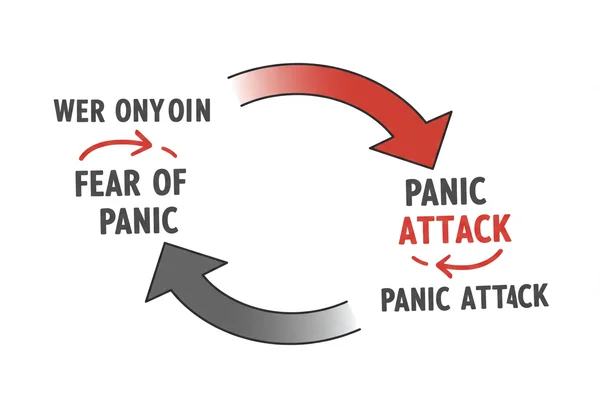
Perhaps the most insidious trigger for agoraphobia is the fear of having another panic attack. After experiencing one, the body and mind can become hyper-vigilant for any internal sensation—a slight dizziness, a faster heartbeat—that might signal the start of another. This internal monitoring means the trigger is no longer just an external place; it’s your own body. This creates a vicious cycle where the fear of panic is what actually triggers the panic, solidifying the need to avoid any situation where an attack might occur.
What Agoraphobia Can Be Mistaken For
Understanding the nuances of agoraphobia is crucial because its symptoms can overlap with other anxiety disorders. Misunderstanding your condition can lead to ineffective coping strategies. It is important to differentiate it to find the right path forward. Please remember, this information is for educational purposes, and only a qualified healthcare professional can provide an accurate diagnosis.
Differentiating Agoraphobia from Social Anxiety and Specific Phobias
Agoraphobia is often confused with social anxiety disorder. While both can involve avoiding crowds, the underlying fear is different. A person with social anxiety fears negative judgment or scrutiny from others. A person with agoraphobia fears being trapped or unable to get help during a panic attack, regardless of what others think.
Similarly, it differs from a specific phobia, like claustrophobia (fear of enclosed spaces). Someone with claustrophobia fears the enclosed space itself. Someone with agoraphobia fears the elevator because it's a place where they might have a panic attack and be unable to escape easily. The focus is on the panic symptoms, not just the situation. If you're unsure, an am I agoraphobic quiz can provide preliminary clarity.
The Link Between Panic Disorder and Agoraphobia
Agoraphobia and panic disorder are deeply intertwined. According to the Diagnostic and Statistical Manual of Mental Disorders (DSM-5), agoraphobia can be diagnosed with or without the presence of panic disorder. However, it very often develops as a complication of recurring panic attacks. The individual begins to avoid places where they've had an attack or where they fear one might happen. This avoidance behavior is what grows into agoraphobia. Recognizing this link is key to addressing both the panic and the avoidance.
Taking Action: From Understanding to Empowerment
Understanding agoraphobia's causes and triggers helps illuminate that it's a complex condition, not a simple fear, shaped by your psychology, biology, and life experiences. From past traumas and genetic predispositions to learned avoidance behaviors, the roots of agoraphobia are deep and multifaceted. Identifying your specific triggers—whether they are crowded malls, open fields, or the fear of fear itself—is a powerful act of self-awareness.
This understanding is your first step toward regaining control. It allows you to approach your feelings with compassion rather than judgment. If this guide resonates with you, your next step could be to gain more personalized insight. We invite you to take the test on our homepage. It’s free, confidential, and takes only a few minutes to complete, providing you with an immediate risk assessment and the option for a deeper, AI-driven analysis to help you on your path to recovery.
Frequently Asked Questions About Agoraphobia Causes & Symptoms
What is the root cause of agoraphobia?
There is no single "root cause" for agoraphobia. It is typically caused by a combination of factors, including a biological predisposition to anxiety, a history of panic attacks, stressful or traumatic life events, and learned avoidance behaviors. For many, the initial trigger is an unexpected panic attack in a public place, which then leads to a fear of that situation recurring.
Can you suddenly develop agoraphobia?
Yes, the onset of agoraphobia can feel quite sudden for some individuals. It often follows a period of high stress or a particularly intense and unexpected panic attack. The shift from being comfortable in various situations to suddenly fearing them can happen over a relatively short period, as avoidance behaviors quickly take hold to prevent further panic.
How do I tell if I'm developing agoraphobia?
Early signs of agoraphobia include a growing fear of specific situations like using public transport, being in crowds, or being in open or enclosed spaces. You might notice yourself making excuses to avoid these situations or feeling intense anxiety when you can't. A key sign is when the fear is about the difficulty of escaping or getting help if you panic. An agoraphobia screening test can help you evaluate these signs.
Can you be agoraphobic and still leave the house?
Absolutely. Agoraphobia exists on a spectrum. Many people with agoraphobia can and do leave the house, but they may do so with significant distress or by sticking to a "safe zone" (e.g., their immediate neighborhood). Others may only be able to leave if accompanied by a trusted person. The diagnosis is not strictly about being housebound but about the intense fear and avoidance of specific situations due to the fear of panic-like symptoms.