Agoraphobia Test: Understanding the Connection with Panic Disorder
Do you find your world shrinking? Does the thought of sudden terror in public spaces lead you to avoid everyday situations? You are not alone. For millions, the combination of agoraphobia and panic disorder creates a challenging cycle of fear. Understanding how these conditions connect is the first step toward regaining control. This guide will help you explore that connection, and an online agoraphobia test can be a valuable tool for gaining personal clarity. Our free, confidential agoraphobia screening provides a safe starting point for understanding your unique anxiety patterns.

What is Agoraphobia and How Does It Differ from Panic Disorder?
Clinical Definitions and Diagnostic Criteria
Agoraphobia is classified in the DSM-5 as an anxiety disorder characterized by intense fear of situations where escape might be difficult or help unavailable if panic-like symptoms occur. Panic disorder, by contrast, involves recurrent, unexpected panic attacks followed by persistent concern about having more attacks. As clinical psychologist Dr. Megan Jones notes: "While 30-50% of people with agoraphobia do not have panic disorder, the two often co-occur in a destructive pattern where one feeds the other."
Key Differences in Symptoms and Triggers
- Agoraphobia symptoms: Fear and avoidance of public transportation, crowds, or open spaces; often needing a "safe person" to go out.
- Panic disorder symptoms: Sudden surges of intense fear including heart palpitations, trembling, shortness of breath, and a fear of dying or losing control.
- Triggers: Agoraphobia is triggered by specific environments or situations, while panic attacks can often strike without any apparent cause.
Do these avoidance patterns feel familiar? Our scientifically-informed screening tool can help identify symptom relationships in just a few minutes.
The Agoraphobia-Panic Cycle: How Fear Feeds Itself
Understanding the Fear of Fear Phenomenon
This cycle, often called "fear of fear," is a psychological trap that creates a self-fulfilling prophecy:
-
You experience a terrifying panic attack.
-
You begin to dread the physical sensations of panic.
-
You become hyper-aware of your body, interpreting any change as a sign of an impending attack.
-
You start avoiding situations where you previously had an attack or where escape would be hard.
-
This avoidance shrinks your world and reinforces the belief that you are unsafe.
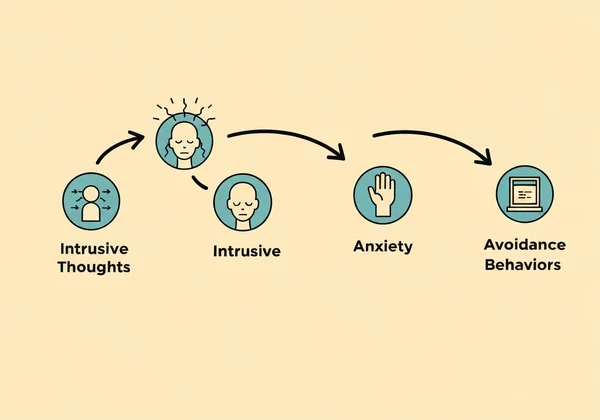
How Panic Attacks Lead to Avoidance Behaviors
Let's consider Sarah, a 28-year-old graphic designer. Her first panic attack happened in a crowded office elevator. The experience was so terrifying—heart pounding, vision tunneling—that she felt she was losing control. The next day, she took the stairs, all 15 flights. Soon, the fear spiraled. She started avoiding client meetings in unfamiliar buildings and eventually stopped taking the subway altogether, adding hours to her commute. Sarah’s story is a common example of how a single panic attack can plant the seed of avoidance that blossoms into agoraphobia.
If you recognize this pattern in your own life, you can explore your personal risk factors with our anonymous assessment.
Diagnosing Co-occurring Agoraphobia and Panic Disorder
The Diagnostic Process: What to Expect
A formal diagnosis from a healthcare professional typically involves:
- A physical exam to rule out other medical causes (like thyroid or heart issues).
- A psychological evaluation using the criteria from the DSM-5.
- An assessment of how long symptoms have persisted (typically over 6 months for a clinical diagnosis).
Common Misdiagnoses and Challenges
Because symptoms can overlap, these conditions are sometimes confused with:
- Social Anxiety Disorder
- Post-Traumatic Stress Disorder (PTSD)
- Specific Phobias
Accurate distinction matters. While only a healthcare professional can provide a diagnosis, a well-designed agoraphobia test can help you organize your symptoms and prepare for that conversation. Get initial clarity through our evidence-based screening tool before your professional consultation.
Evidence-Based Treatment Approaches for Both Conditions
Cognitive Behavioral Therapy (CBT) and Exposure Techniques
CBT is considered the gold standard for treating both conditions. Key techniques include:
-
Interoceptive Exposure: Gently and safely confronting feared bodily sensations (like a racing heart) in a controlled setting to reduce their power.
-
In Vivo Exposure: Gradually and systematically re-entering avoided situations with the support of a therapist.
-
Cognitive Restructuring: Learning to identify and challenge catastrophic thoughts that fuel the anxiety cycle.

Medication Considerations and Complementary Approaches
Always consult a medical professional before starting or stopping any medication.
- SSRIs and SNRIs are often prescribed as a first-line pharmacological treatment.
- Breathing retraining and mindfulness techniques can help manage anxiety symptoms in the moment.
Your treatment path starts with understanding your specific needs. Take the first step with our AI-powered analysis to identify your unique symptom profile.
Breaking the Cycle: Your First Step Toward Freedom
Recognizing the connection between agoraphobia and panic disorder is a powerful first move. It transforms a confusing spiral of fear into an understandable pattern you can address. You don't have to map your symptoms alone. An agoraphobia test can serve as your confidential starting point. Thousands have used our free assessment tool to:
-
Clearly identify their symptom relationships
-
Receive personalized coping strategies
-
Prepare for a more productive conversation with a healthcare provider

Take the next step toward reclaiming your world. Get confidential insights from our scientifically-developed test today—no email required.
Frequently Asked Questions About Agoraphobia and Panic Disorder
Can you have agoraphobia without panic attacks?
Yes. While they often occur together, research suggests a significant number of people with agoraphobia do not have a history of panic attacks. In these cases, the fear may be of other incapacitating symptoms rather than panic itself.
How do I know if my anxiety is just panic disorder or has developed into agoraphobia?
The key difference is avoidance. If your fear of having a panic attack causes you to consistently avoid two or more situations (like using public transport, being in a crowd, or leaving home alone), it may have evolved into agoraphobia. Try our free symptom checker for initial clarity.
What comes first: panic disorder or agoraphobia?
It varies. For many, panic disorder develops first, and the fear of future attacks leads to agoraphobia. However, some people develop agoraphobic fears and avoidance without ever having a full-blown panic attack.
Can agoraphobia and panic disorder be cured?
While "cured" might not be the right word, both conditions are highly treatable. With evidence-based therapies like CBT, a vast majority of people achieve significant, long-term symptom reduction and can live full, unrestricted lives. Early intervention dramatically improves outcomes.
How long does treatment typically take for co-occurring conditions?
This is highly individual, but a standard course of CBT often involves 12-20 weekly sessions. Medication may be recommended for 6-12 months or longer. The most important part is learning lifelong coping strategies to manage symptoms and prevent relapse.
Identify your personal starting points with our helpful self-assessment today.