Agoraphobia Test: Breathing Exercises for Panic Relief
Feeling overwhelmed by agoraphobia-related panic? You're not alone. Many people experience intense anxiety when thinking about public transport, open spaces, or crowded places. The feeling can be isolating, but practical help is available. It can start with something as simple as your own breath.
This article guides you through 7 evidence-based breathing exercises. These are practical tools to manage panic attacks. They help reduce the hum of daily anxiety. You will discover how simple, focused breathing can make a significant difference in how you feel.
Understanding your personal triggers is the first step to regaining control. A structured assessment can be a great way to begin this journey. Let's explore how you can build a foundation of calm, one breath at a time.

Understanding Agoraphobia Panic & Relief Techniques
Before diving into the exercises, it’s helpful to understand why they work. Panic attacks from agoraphobia are not just "in your head." They are powerful physical and psychological events. By learning simple relief techniques, you can respond to your body's signals with confidence instead of fear.
The Physiology of Panic: Why Breathing Helps
When you feel threatened, your body’s "fight-or-flight" response kicks in. Your heart rate increases, your muscles tense, and your breathing becomes rapid. This is your nervous system preparing for danger. In a panic attack, this system activates even without a real physical threat.
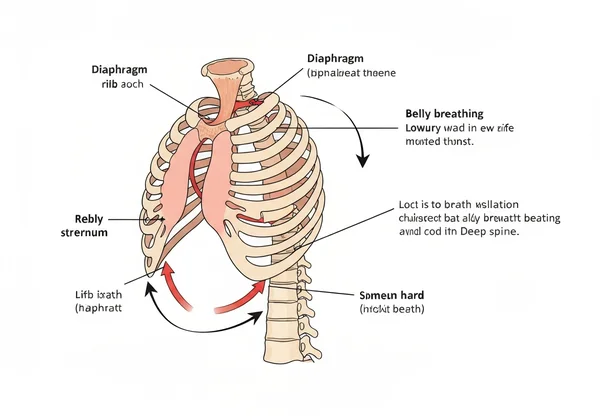
Shallow chest breathing worsens anxiety. It creates a panic loop. Deep breathing reverses this. It activates your body’s 'rest and digest' system. This lowers your heart rate, relaxes muscles, and brings you calm.
Recognizing Your Panic Triggers and Early Signs
Self-awareness is your greatest ally. Many panic attacks don't appear out of nowhere. They often have early warning signs. Learning to recognize these signs gives you a crucial window of opportunity. You can then use a breathing exercise before the panic becomes overwhelming.
Common early signs include:
- A suddenly racing heart
- Feeling dizzy or lightheaded
- A tightening in your chest or throat
- Sweating or feeling a sudden chill
- A growing sense of unreality or dread
Spot these signals early. This helps you shift from reacting to panic to proactively managing it. A clear picture of your challenges is invaluable. You can assess your symptoms online to gain confidential insight.
7 Evidence-Based Breathing Exercises for Agoraphobia
Here are seven simple yet powerful breathing techniques. Try them in a calm moment first. This makes them feel familiar and accessible when you need them most.
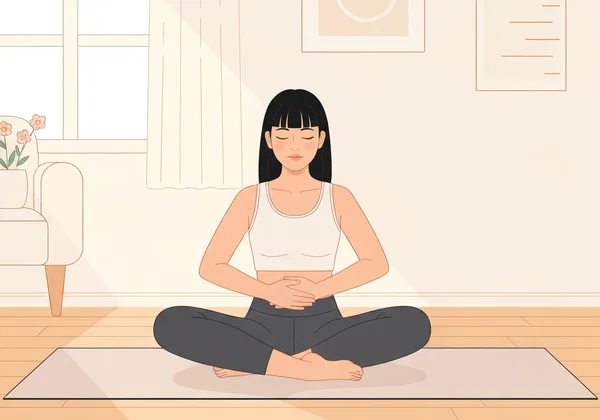
Diaphragmatic (Belly) Breathing for Deep Relaxation
This is the foundation of most relaxation techniques. It encourages full oxygen exchange. This process can slow the heartbeat and stabilize blood pressure.
- Sit or lie down comfortably. Place one hand on your chest and the other on your belly.
- Breathe in slowly through your nose for about four seconds. Feel your belly rise as you inhale. The hand on your chest should remain relatively still.
- Hold your breath for one or two seconds.
- Exhale slowly through your mouth for about six seconds, feeling your belly fall. Repeat for 3-5 minutes.
The Calming Power of 4-7-8 Breathing
Developed by Dr. Andrew Weil, this technique calms a racing mind and promotes sleep. It acts as a natural tranquilizer for the nervous system. Sarah, a user like you, shared how 4-7-8 breathing helped her step onto a bus after weeks of avoidance.
- Exhale completely through your mouth, making a whoosh sound.
- Close your mouth and inhale quietly through your nose for a count of four.
- Hold your breath for a count of seven.
- Exhale completely through your mouth, making a whoosh sound for a count of eight.
- This is one breath. Inhale again and repeat the cycle three more times.
Box Breathing: A Technique for Focus and Calm
Also known as square breathing, Navy SEALs use this technique to stay calm under pressure. Its simple, rhythmic nature is excellent for regaining focus during high stress.
- Inhale slowly through your nose for a count of four.
- Hold your breath for a count of four.
- Exhale slowly through your mouth for a count of four.
- Hold your breath again for a count of four.
- Repeat the cycle for several minutes until you feel centered.
Pursed-Lip Breathing: Gentle Control for Shortness of Breath
When panic causes shortness of breath, this technique helps you regain control quickly. It slows your breathing pace and makes each breath more effective.
- Relax your neck and shoulders.
- Breathe in slowly through your nose for two counts, keeping your mouth closed.
- Pucker or "purse" your lips as if you were about to whistle.
- Exhale slowly and gently through your pursed lips for a count of four.
Alternate Nostril Breathing: Balancing Your Nervous System
This yogic breathing practice, known as Nadi Shodhana, is believed to harmonize the two hemispheres of the brain. It also helps balance your energy.
- Sit comfortably. Hold your right hand up to your nose and press your thumb on your right nostril to close it.
- Inhale slowly through your left nostril.
- Close your left nostril with your ring finger, then release your thumb and exhale through your right nostril.
- Inhale through the right nostril.
- Close the right nostril, then release your ring finger and exhale through the left nostril.
- Continue this pattern for 5-10 cycles.
Coherent Breathing: Finding Your Natural Rhythm
The goal here is to breathe at a rate of five to six breaths per minute. This rhythm is considered optimal for calming the nervous system.
- Find a comfortable position.
- Inhale gently through your nose for a count of six.
- Exhale gently through your nose for a count of six.
- Continue this balanced inhale and exhale for several minutes. Do not pause between breaths. You can use a timer or app to help keep the rhythm.
Grounding Breath: Connecting with the Present Moment
This exercise combines deep breathing with a simple grounding technique. It’s perfect for when you feel disconnected or overwhelmed by anxious thoughts.
- Sit on a chair with your feet flat on the floor.
- Close your eyes and take a few deep belly breaths.
- As you continue to breathe, turn your focus to the physical sensation of your feet on the ground. Notice the pressure, the texture of your socks, and the solidness of the floor.
- With each exhale, imagine you are releasing your fear and anxiety down through your feet and into the earth.
Integrating Relaxation into Your Daily Life & Overcoming Fear
Mastering these exercises is step one. The real power comes from daily practice. Use them to gently face the fears associated with agoraphobia.
Proactive Practice vs. Reactive Response
Don't wait for a panic attack to practice. Spend 5-10 minutes each day doing one or two of these exercises. When you practice in a calm state, you build "muscle memory" in your nervous system. This makes it much easier to call upon these skills when you feel anxious. Think of it as training for your mind.
Creating a Supportive Environment for Self-Help
Set yourself up for success. Find a quiet place in your home where you can practice without interruption. You might listen to calming music or use a meditation app to guide you. Be patient and compassionate with yourself. Some days will be easier than others, and that is okay. The goal is consistent effort, not perfection.
When Breathing Isn't Enough: Seeking Further Support
Breathing exercises are a powerful tool for managing symptoms. However, they are one part of a larger recovery plan. They help you cope in the moment but may not address the root causes of agoraphobia. If your symptoms significantly impact your daily life, seeking further support is a sign of strength.
Understanding the nature of your symptoms is a crucial part of this process. A clear assessment can provide valuable insights to share with a healthcare professional. To take the first step toward clarity, consider using a confidential online tool.
Your Journey Towards Calm Starts Now: Take the Agoraphobia Test
You've just learned seven powerful techniques to calm your body and mind. Conscious breathing is a free, accessible tool you can carry with you anywhere. It empowers you to actively participate in your well-being and face challenges with greater resilience.
However, managing symptoms is most effective when you understand the problem. Gaining clarity on your experiences with anxiety is the foundation for a successful recovery journey. Our free and confidential assessment can help you map out your symptoms and provide personalized insights.
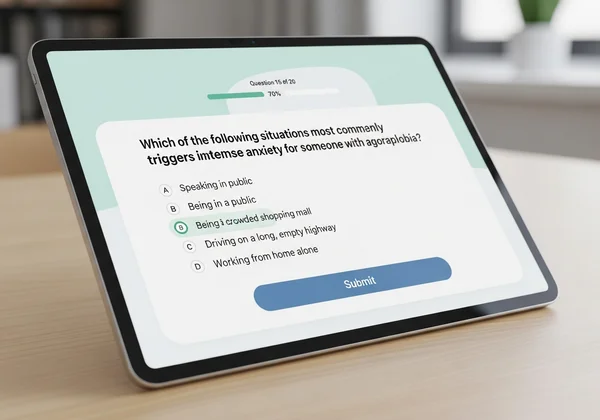
Are you ready to better understand your feelings? Take the Agoraphobia Test today. It’s quick, anonymous, and the first step toward a calmer future.
The Takeaway
How do you test for agoraphobia symptoms effectively?
A formal diagnosis can only be made by a qualified healthcare professional, like a psychologist. However, a great first step is a structured self-assessment. An effective online agoraphobia test asks questions based on established psychological criteria. This helps you identify patterns in your fears and avoidance behaviors. The entire process is confidential.
What are the levels or stages of agoraphobia?
Agoraphobia exists on a spectrum. For some, it may be mild anxiety in a crowded supermarket. For others, it can be more severe, leading to significant avoidance or even becoming housebound. There are no official "stages." Professionals assess its severity based on how much it interferes with a person's daily life, work, and social relationships.
Can I still lead a functional life with agoraphobia if I practice self-help?
Absolutely. Many people with agoraphobia lead full and meaningful lives. The key is active management. Combining self-help strategies with other tools is key. Use these breathing exercises with gradual exposure or professional therapy, like Cognitive Behavioral Therapy. This combined approach can significantly reduce symptoms and improve your quality of life.
What's one crucial thing NOT to do when experiencing agoraphobia?
The most crucial thing not to do is give in completely to avoidance. While avoiding feared situations provides temporary relief, it strengthens the agoraphobia in the long run. It teaches your brain that the only way to be safe is to stay away. The goal of recovery is to gently teach your brain that you can handle these situations. This process is gradual and often works best with a therapist's support.